Date Published
February 7, 2025
Updated For
ALS PCS Version 5.2
#SWORBHPTips
Pediatric Airway Pearls
Tips and tricks for this respiratory season
Part 1: Anatomic differences + Optimizing Pediatric Airway Positioning
- Respiratory virus season is upon us
- This means an increase in calls for respiratory symptoms, including in the pediatric population
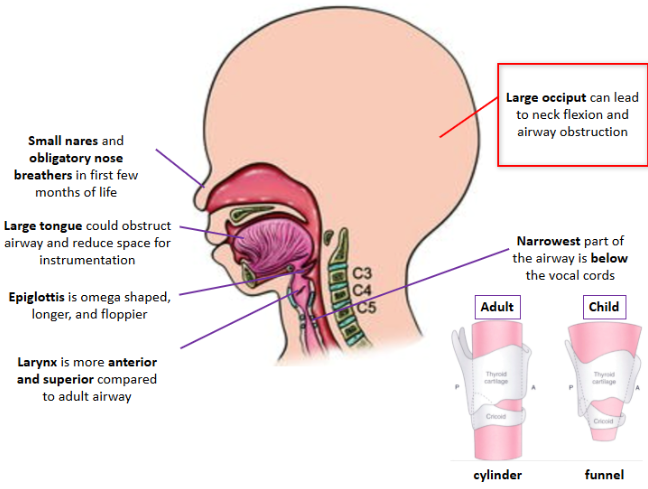
- This #SWORBHPTips series will review some pediatric pearls based on anatomic differences in the pediatric airway and how to alter your management strategy to optimize your ventilation in this population
(see image)
Pediatric Airway Positioning
- To obtain the most patent airway, the "sniffing position" is utilized
- In pediatric patients the optimal way to obtain this position varies by age group
- Infants have a much larger head vs. body size
- Older children are proportionally more like adults
- Let's look at how best to obtain this positioning
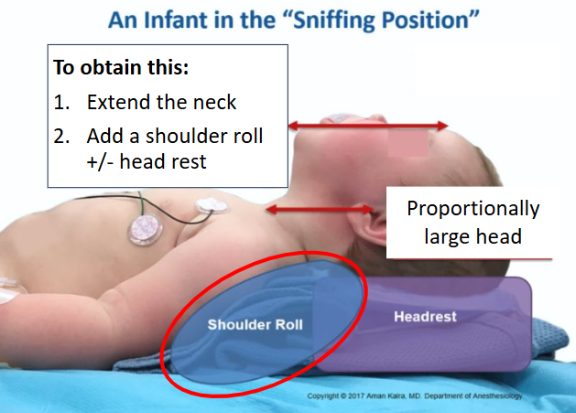
Sniffing Position: Infant
Tip: See red arrows (see image below)
1) Forehead level with chin, 2) Ear canal level with sternal notch
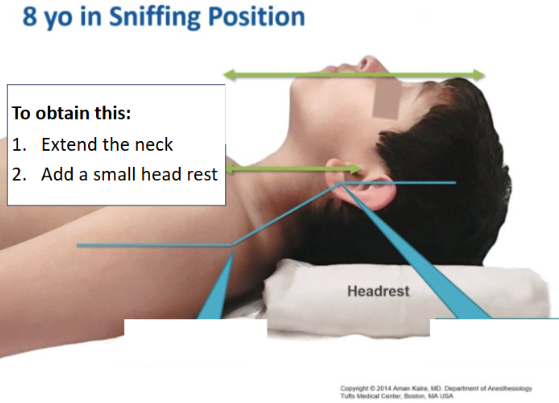
Sniffing Position: Child
Tip: See green arrows (see image below)
1) Forehead level with chin, 2) Ear canal level with sternal notch
Summary: Positioning
- In order to obtain the optimal airway patency, the sniffing position is utilized
- The method to obtain this position is different based on pediatric age group
- Infants typically require a shoulder roll due to their large head
- Older children are more similar to adults and may require a head rest/roll
- The method to obtain this position is different based on pediatric age group
Stay tuned for more tips on the Pediatric Airway in this #SWORBHPTips series
Categories
Additional Resources:
No additional resources available for this #SWORBHPTip.
Share this tip with others:
Select a platform: